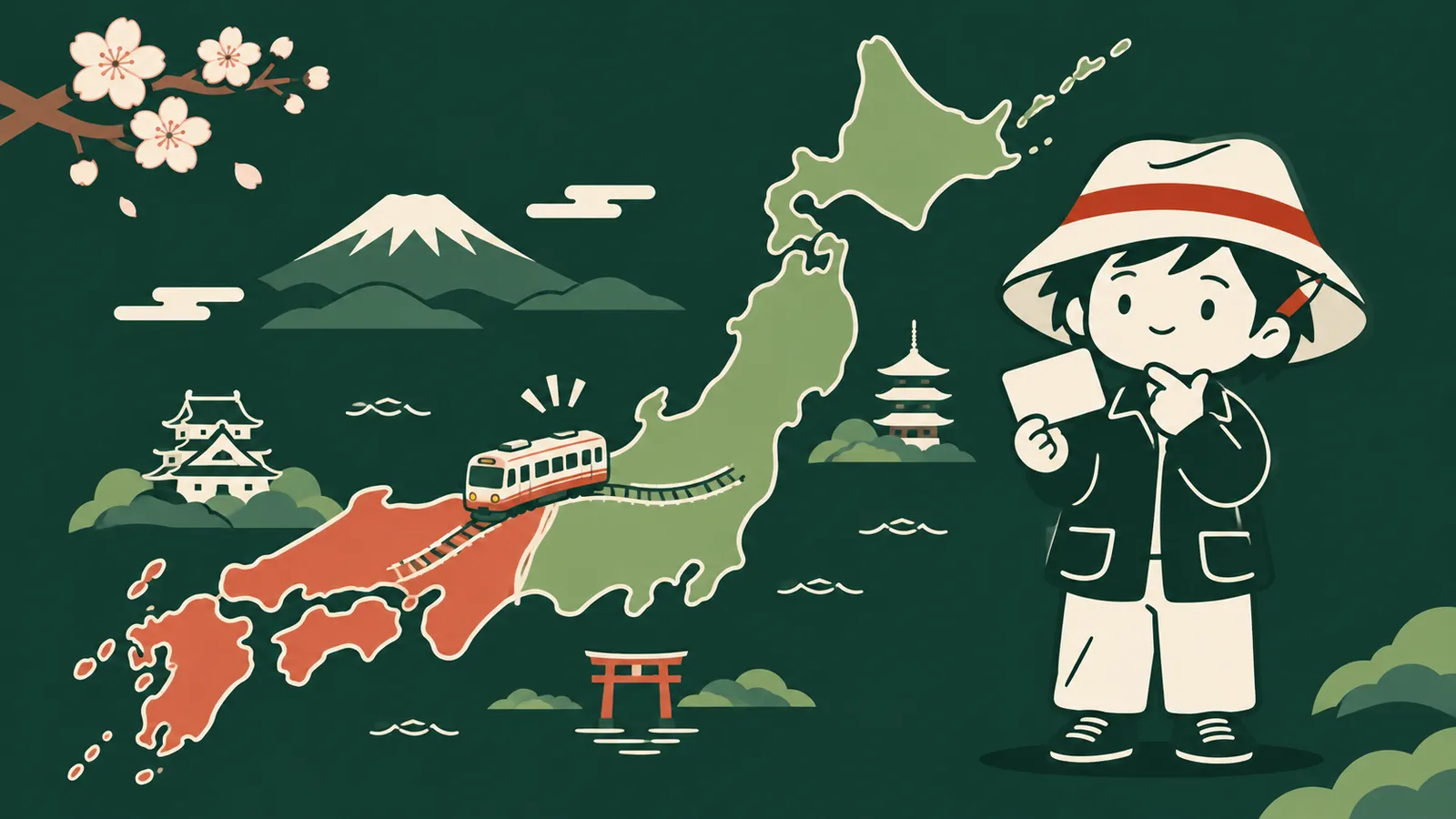
Card compatibility, IC area and ticket: which three things do I separate first?
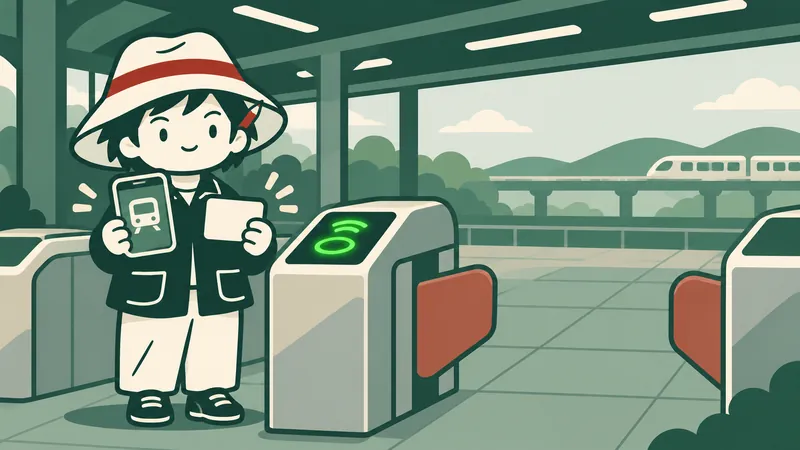
Separate three things: whether the card can be used in that area, whether this ride can be completed within one area, and whether you still lack another ticket (for example for the Shinkansen). The limit is by "area of use". JR Central's nationwide interoperability page states that TOICA can be used within the areas of Kitaca, PASMO, Suica, manaca, PiTaPa, ICOCA, Hayakaken, nimoca, SUGOCA and others, for example Sapporo to Otaru (Kitaca area), and states that this applies only to rides that finish within a single area and may not cross different areas.
The same page also lists exceptions: the Suica and PASMO areas of the Tokyo region, and parts of the SUGOCA and Hayakaken areas in Kyushu (through-running sections), can be used across areas. So the rule depends on the full route and the operator, and cannot be simplified to "changing company never works".
JR West's ICOCA area page states that one ICOCA can be used on rail and buses in the ICOCA area and the Kitaca, PASMO, Suica, manaca, TOICA, PiTaPa, Hayakaken, nimoca and SUGOCA areas; but except for some parts it cannot be used across areas, and use within interoperating areas follows each company's rules. The same page also states that in the ICOCA area it cannot be used for sections over 200 km of operating distance, except in cases such as issuing and arriving within the Osaka suburban zone.
Does your card work?
Confirm the route takes part in interoperability, and the area operator's rules for your type of card.
Can this route be tapped through?
Check the full start and end stations, the lines passed and the area boundaries; for crossing areas or going outside an area, buy a through ticket first.
Which ticket is missing?
The Shinkansen has its own booking process; see “What is the difference between a Shinkansen booking tied to an IC card and deducting the card balance?”
Two official examples of crossing areas: can a normal stored-value card handle them directly?
If you hold a stored-value card, the answer is: buy a through ticket first. JR Central's TOICA area page states that, except within the commuter-pass section, you cannot ride beyond the area; when riding across the inside and outside of an area, buy a ticket for the whole ride section beforehand. The two examples in the cross-area commuter pass table come from JR Central's cross-area IC commuter pass page, and that page is about commuter passes, not stored-value cards.
Examples from JR Central's cross-area IC commuter pass page (checked 2026-11-06)
The table scrolls horizontally. Keyboard users can Tab to the table and use the arrow keys.
| Route | Areas as stated on the page | What it means for a stored-value traveller |
|---|---|---|
| Numazu to Odawara, conventional line | Page example: Numazu in the TOICA area to Odawara in the Suica area | Usable within the commuter-pass section; Chigasaki, outside the section, cannot use the automatic gates. A stored-value card crossing areas still follows the single-area rule on JR Central's nationwide interoperability page, so a through ticket is bought first |
| Hikone to Ogaki, conventional line | Page example: Hikone in the ICOCA area to Ogaki in the TOICA area | As with Numazu to Odawara, a stored-value card crossing areas buys a through ticket first; the page states crossing areas is only allowed within the commuter-pass section |
JR East's Suica page also states that the areas cannot be crossed (read as a summary, not verbatim; checked 6 November 2026). These are quotations of the rules, not a check of timetables, fares or connection times for your travel dates.
Before departure, how do I give the full route to station staff and ask?
If the route has an area boundary, a station outside the area, or an exception you cannot read, write down the start, the end, the stations passed through and the train type, and show the whole route to station staff before entering. You can start looking up the official area data from JR Central's TOICA area entry page and JR East's Suica page, then follow through to the actual operator.
Ask station staff using this question (drafted for this guide; the staff's reply governs): "From ___ Station to ___ Station via the ___ Line: can I ride through on my IC card? If not, please give me a ticket for the whole journey."
What is the difference between a Shinkansen booking tied to an IC card and deducting the card balance?
If you book the Shinkansen with SmartEX, the answer is: the IC card is only the boarding credential, and the Shinkansen fare is charged to the registered credit card at booking. JR Central's SmartEX page states that it is an online booking service for the Tokaido, Sanyo and Kyushu Shinkansen; the Shinkansen fare is settled at booking by the registered credit card; non-reserved seats also need a booking; booking and changes are accepted from 5:30 to 23:30; and the cards you can register are the 10 types of transport IC cards that interoperate nationwide. This guide did not check other Shinkansen lines.
JR Central's Shinkansen transfer gate explanation also states that the Shinkansen fare cannot be deducted from a TOICA stored value; the conventional-line legs before and after are settled separately by TOICA by section. The SmartEX page also states that the conventional-line fares before and after are charged separately, and, depending on the section, the total of "SmartEX plus conventional line" may cost more than a through ticket bought at the counter. JR Central's transfer gate explanation also states that for some sections a ticket covering the Shinkansen and conventional line together may be cheaper. This guide does not calculate prices.
When transferring with a paper ticket and an IC card together, JR Central's transfer gate explanation states that if the departure station on the paper ticket differs from the Shinkansen boarding station, it may not be usable together with TOICA. Show all your tickets and cards to station staff to confirm.
If you have not yet completed a reservation, for payment verification failures and the limits of debit cards and apps, see Shinkansen luggage over 160 cm: which lines need a reservation?.
If I tapped in with Suica or TOICA but cannot tap out, how do I pay the fare and clear the record?
If you tapped in with Suica and rode out of the Suica area, JR East's Apple Pay FAQ (No.1523, updated 2021) states: report to the ticket-gate staff at the station where you get off and pay the fare from the boarding station; after settlement the Suica still holds the entry record, so you must also ask staff at a station inside the Suica area to "clear the entry record". Official FAQ
If you use TOICA: JR Central's interoperability page also states: if you unavoidably ride beyond the area, report to the staff or crew at the station where you get off and pay the fare from the boarding station. The IC gate page states: you must tap both at entry and exit; if you pass without tapping, the card cannot be used next time; at unstaffed stations, report at the next staffed station; when you get off at an unstaffed station, the conductor checks the card, on one-person-operated trains you must show it to the driver, and then tap the simple TOICA ticket reader installed at the station. This guide did not check how ICOCA, Kitaca and other cards are handled; JR West states that within interoperating areas each company's rules apply.
Six Suica areas merge at the end of fiscal 2026: can I treat it as already in force?
No. JR East's announcement PDF (URL dated 8 September 2026; read as a summary, not verbatim) states that the six existing Suica areas (Tokyo region, Sendai, Niigata, Aomori, Morioka, Akita) are planned to be merged into one area covering all of JR East by the end of fiscal 2026; the start date and other details will be announced once decided. The announcement does not give a specific date.
The scope of this plan is JR East's Suica areas, and it cannot be taken to mean that all area boundaries among Suica, TOICA, ICOCA and others will be removed. If you travel in 2027, check the formal implementation announcement and the stations you will use again.
Frequently asked questions
If I cross ten prefectures, do I need ten cards?
JR Central and JR West both state their limits by IC area of use; if the ride finishes within one area, the same interoperable card can be used. For long sections that cannot be tapped through, buy a ticket separately.
I have Suica; if I switch to ICOCA, can I cross the TOICA area?
JR Central and JR West both state that one ride cannot cross different areas; the only exceptions JR West lists are the through-running sections between Tokyo-area Suica and PASMO and between SUGOCA and Hayakaken in Kyushu, and switching to another card is not among them. Solve the through ticket, or the way of splitting the journey that the operator permits, first. For buying cards and phone support, see can a non-Japan-model Android use Suica: check the model first.
Within one IC area, do I only need to tap the card?
Not necessarily. When you book with SmartEX (Tokaido, Sanyo and Kyushu Shinkansen), the Shinkansen fare is charged to the credit card at booking and is not deducted from the card balance. Other ticket types (limited express and so on) were not checked one by one in this guide, so confirm with station staff.
Which official pages should you check before you go?
The pages below are official pages; the content is as listed when checked on 6 November 2026 and does not represent on-site stock, or that your device or payment has been tested successfully.
- JR Central: Nationwide IC interoperability and the limit on crossing areas(operator's official page)
- JR Central: TOICA rail areas of use(operator's official page)
- JR Central: Scope of cross-area IC commuter passes(operator's official page)
- JR Central: IC gates and incomplete records(operator's official page)
- JR Central: SmartEX(operator's official page)
- JR Central: IC cards and Shinkansen transfer gates(operator's official page)
- JR East: Suica fares and area of use(official page; read as a summary, not verbatim)
- JR East Apple Pay FAQ: Riding beyond the Suica area (No.1523)(official FAQ)
- JR East: Plan to merge Suica areas at the end of fiscal 2026 (PDF)(official announcement; read as a summary, not verbatim)
- JR West: ICOCA areas of use(operator's official Japanese page: interoperability, the limit on crossing areas and the 200 km rule)
This guide has no affiliate links and no merchant commission.
Practical choices. Official sources. Room for a backup plan.
Back to all travel guides